Posts by David Shriner-Cahn
STP078: “Understanding who you are and what you stand for”: Overcoming Challenges with Orlando Bowen
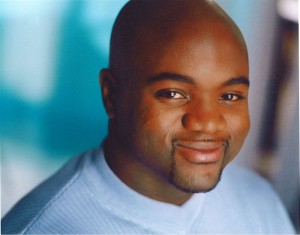
 Orlando Bowen is a former professional athlete and television personality who motivates youth and corporate audiences with keynotes. Here, he shares his story of a traumatic 2004 episode in which he was seriously assaulted by two corrupt plain-clothes police officers; he describes how they planted drugs on him and charged him with assault. After being acquitted and settling a lawsuit against the Peel, Ontario police out of court, Bowen has dedicated his life to working with youth, helping them become future leaders. He is the founder and Executive Director of the One Voice One Team youth leadership organization.
Here, he discusses:
- The necessity of finding fulfilling work
- How “understanding who you are and what you stand for” will help you overcome challenges and move forward.
- Surrounding yourself with people who share the same values
- How your value system will help you make trajectory-including decisions at “moments of truth”—decisions that may affects your business, life, and relationships
- Handling “game breakers”—when you have to set your goals aside to handle unplanned-for situations
Orlando’s mission is to inspire people to be “Game Changers” in the lives of others. He created the SWOLE Leadership Development Program (Self-respect, Work hard, Overcome adversity, Lead by example, and Excellence). He was awarded the 2012 African Canadian Achievement Award, the 2013 Queen’s Diamond Jubilee Medal, and a national 2014 Harry Jerome Award for community service. He is also the 2015 president of the Toronto Chapter of the Canadian Association of Professional Speakers.
Learn more about Bowen at www.OrlandoBowen.com.


0Shares
Family and Faculty Mentors: Julie Ducharme’s Influences
In her interview on yesterday’s episode of Smashing the Plateau, entrepreneur and educator Julie Ducharme discussed how businesses can keep on top of their market and move forward, and what skills they need—and what investments they might need to make—to do so. Here, she discusses the people who have helped her move forward as she founded her…
Read Full PostSTP077: Strategic Business Expansion with Julie Ducharme

 Julie Ducharme is a speaker, consultant and author on leadership, business, and marketing. She is the CEO of JD Consulting LLC, CEO of Julie’s Party People, and president of Synergy Learning Institute. She is also a Professor and mentor for the Doctor of Business Administration (DBA) Program at Walden University. Here, Ducharme speaks about when and how to choose to strategically expand a business—whether by investing in new equipment, human capital, or by forming strategic partnerships.
She also discusses:
- When caution can become a liability, and when a calculated risk is the right move for a business
- The importance of understanding your market, and of understanding how social media can help you reach out to consumers
- Knowing when to spend money to make money, whether by investing in equipment, marketing or technological education.
- Understanding the power of networking and partnerships, and getting to know people in the industry who “might need you”—or who , in turn, you can send clients to for services you don’t offer
- Finding good mentors by immersing yourself in the industry
Ducharme started her career in college and professional sports; for the past 15 years, she has been working with corporations, colleges and universities around and outside of San Diego. She regularly consults for businesses and schools in various areas of business, public outreach, curriculum, program design and other topics in the business and academic arenas, and is published chapters in the bestselling The Refractive Thinker series.
Learn more about JD Consulting at www.jdconsultingsolutions.com or about Ducharme’s education programs at www.synergylearninginstitute.org. Ducharme also has presences on LinkedIn (Julie Ducharme) and Twitter (@julieducharme).
0Shares
Forecasting, Futurism and Common Sense: Salim Ismail's Influences
In his interview on yesterday’s episode of Smashing the Plateau, technological visionary Salim Ismail spoke about how fast-moving tech is changing how entrepreneurship works, and how our legal, educational, and other structural social systems need to adapt quickly to accommodate this accelerating rate of change. Here, this visionary speaker and writer looks back, providing a…
Read Full PostSTP076: “One of the most extraordinary opportunities in the history of business”: Breakthrough Technologies with Salim Ismail

 Salim Ismail is a speaker, strategist and entrepreneur based in Silicon Valley. He specializes in breakthrough technologies, and has spent the last six years building Singularity University as its founding Executive Director and current Global Ambassador. Here, he discusses how rapidly-changing technologies are changing both the face and the needs of a variety of industries and society in general, and how this rapid change can translate to opportunities for those who are able to adapt and move at a fast pace.
He also discusses:
- Why we’re experiencing another “Gutenberg” technology moment—or ten of such moments!—at the same time
- How our political, technical, legal, healthcare and education systems all need to be updated for today’s fast-moving technological world—and what Singularity is doing to address these changes
- Why we are experiencing “one of the most extraordinary opportunities in the history of business”, particularly for small and medium-sized businesses that can change and innovate quickly
- The challenge of communicating huge visions as a leader to people who may not be in the same headspace
- The value of “detoxing” periodically to get away from the psychological stress of starting and running a business
Prior to his work at Singularity, Ismail was a Vice President at Yahoo, where he built and ran Brickhouse, Yahoo’s internal incubator. His last company, Angstro, was sold to Google in 2010. He has founded or operated seven early-stage companies including PubSub Concepts, which laid some of the foundation for the real-time web.
Ismail has been featured in the New York Times, Bloomberg BusinessWeek, Fortune, Forbes, Wired, Vogue and the BBC. He advises Fortune 500 executives and many world governments on the future of technology and has recently released his first book, Exponential Organizations.
Learn more about Singularity University at SingularityU.org; Ismail’s book at ExponentialOrgs.com, or follow Ismail on Twitter (@SalimIsmail).
0Shares
Towards Fellowship and Purpose: Rick Martinez's Influences
On his interview on yesterday’s episode of Smashing the Plateau, Rick Martinez spoke about what he calls “bink” moments—moments of personal clarity that can be assessed and used to move forward towards some greater goal in life. Here, he lists those individuals and organizations who have helped him move toward business success, and his understanding…
Read Full PostSTP075: Understanding “Bink” Moments to Move Towards Purpose and Happiness with Rick Martinez

 After serving in the army and later becoming a registered nurse, Rick Martinez founded MedTrust, a staffing service that sends nurses and doctors to military hospitals nationwide, where they’re needed. Today, his focus is Project BINK, which helps people contemplate and act on what he calls “bink” moments—those moments when clarity and a level of awareness enters one’s life, as clear as the clink of a wine glass. Here, he speaks about giving such moments time and space, and understanding how to use them to move forward in life and/or business—toward “purpose-driven happiness.”
He also discusses:
- Assessing risk and responsibility before making major changes
- Understanding difficult situations as potential opportunities for a life change
- Maintaining a work-life balance, even when the same qualities that make you a good entrepreneur may cause challenges outside of the workplace
- Taking advantage of the value of mentors and community to entrepreneurs
- Making sure that thought and planning eventually lead to action
The San Antonio Business Journal named Rick one of its “40 Under 40,” and MedTrust was listed among the US Small Business Administration’s (SBA) Top 100 companies. In Martinez’s second company, Alamo CrossFit (a licensee of the global brand CrossFit, Inc.), he created a corporate culture to reflect his own ideals—gym clients became members of a “Tribe,” working together and motivating each other to achieve shared goals. His current focus is Project BINK.
Learn more at www.projectbink.com or at www.itsRickMartinez.com.
0Shares
Modern Mentors, Partners, and Historic Heroes: Jack Daly's Influences
In his interview on yesterday’s episode of Smashing the Plateau, Jack Daly described the processes that any business should put in place to ensure successful sales and sales processes, from hiring to training to sales follow-ups. Here, he provides a list of those individuals and texts who have influenced his understanding of what leads to success, from modern…
Read Full PostSTP074: Building a Winning Sales Culture Through Proven Processes: Jack Daly on the Systems that Engender Successes

 Sales and sales management expert Jack Daly has built 6 companies into national organizations, two of which he subsequently sold to the Wall Street firms. Today, he delivers keynote and general session presentations on sales; he has also been a cited influencer for several prior guests on Smashing the Plateau. Here, he argues that having a proven system for sales and sales management in place is a “differentiator” for business success, and that companies need to consciously work to create a winning company culture, and prioritize quality and training over speed when growing their sales force and helping individual salespeople become more effective.
He also discusses:
- How sports teams—who never take the field without systems, processes, preparation, training, and practice—are more prepared for success than “most businesses in the world today.”
- The central importance of a playbook for success
- Why people and companies tend to underperform compared to their potential because they “run to the urgent at the expense of the important”
- The importance of executing simple, basic things that work—and executing them well. “Take a breath! Don’t be in such a hurry to go out into the marketplace. Figure out what works, and then build it in your processes.”
- The four necessary legs of a winning company culture, and how to begin implementing them: Recognition systems; communication systems; personal and professional development processes; and employee empowerment processes.
Daly is currently developing a companion book to his bestselling Hyper Sales Growth, titled The Sales Playbook for Hyper Sales Growth, which will provide more details on the systems and processes described in Hyper Sales Growth, along with timelines for putting them into play.
To learn more about Daly, visit JackDaly.net or call (888) 298-6868.
0Shares
Leaders and Business Thinkers: Greg Crabtree's Recommendations
On his appearance on yesterday’s episode of Smashing the Plateau, Greg Crabtree described how small businesses can plan ahead to give themselves both profitability and purpose. Here, he describes some of the leaders who have influenced the development of his own business philosophies: 1. Verne Harnish (www.gazelles.com) Crabtree describes Harnish as a “great business thinker”…
Read Full PostSTP073: “Profit + Purpose = Impact”: Planning to Make a Difference with Greg Crabtree

 Speaker, author, entrepreneur and financial expert Greg Crabtree has come a long way since he grew up on a chicken farm in Alabama. He is currently CEO of Crabtree, Rowe & Berger, PC, a CPA firm that helps entrepreneurs build the economic engine of their business; he also specializes in helping clients develop a business plan that includes a “purpose”—a sense of how they want to help their community or give back once the business becomes successful. Here, he discusses why all small business should have that plan and that purpose—and why purpose should not come at the expense of profitability.
Other topics include:
- The key untruths that too many small business owners tell themselves regarding pay and profitability
- Separating owner wealth vs. business profitability
- Why “profit plus purpose equals impact”
- The importance of knowing “what does healthy look like, and how to get there” for your business
- The problem of listening to “the noise” of the media and business anecdotes, rather than hard business numbers
- “The number one problem inhibitor to success in today’s market is effectiveness of marketing… Nine out of ten companies that we break down are not spending enough money on marketing”
- Why financial consultants needs to be more proactive about helping clients learn from the results of audits and other financial work
In addition to serving as the Crabtree, Rowe & Berger‘s CEO, Crabtree leads the business consulting team, which helps clients align their financial goals with their profit model and their core business values. In 2011, Greg published the book Simple Numbers, Straight Talk, Big Profits! He is a National Area Council Member of the Boys and Girls Clubs of America, and is involved in the ALS Association of Alabama and the Boys and Girls Clubs of North Alabama. He is a former board member of the Atlanta chapter of The Entrepreneurs’ Organization (EO).
Learn more about Crabtree’s work at SimpleNumbers.Me; Crabtree Rowe & Berger’s site is available at CRBCPA.net.
0Shares
Socially-Conscious Business Practices: Pandwe Gibson's Influences
In her interview on yesterday’s episode of Smashing the Plateau, Dr. Pandwe Gibson discussed creating eco-friendly opportunities for economic development in low-income communities. Here, she provides a list of the writers and mentors who have influenced her work: 1. Black Tech Week (blacktechweek.com) “They’re doing tremendous, tremendous work in terms of bringing diversity conversations into…
Read Full PostSTP072: Innovation and Eco-Friendly Economic Development with Pandwe Gibson

 Pandwe Gibson describes the focus of her work: “How do you create opportunities for economic development in low-income communities? Because that is the vehicle to having a happy, healthy, fulfilled life.” Gibson’s career has worked to answer this question—after founding a network of schools in Louisiana to create educational opportunities for students after Hurricane Katrina, she shifted into a more community-based direction, since stable communities and employed adults were also crucial for children’s development.
Currently, she is founder of Ecotech Visions, a Miami-based tech incubator currently helping 18 green manufacturing companies find the right people, make the right connections, and grow the needed leadership skills to develop into influential innovators and stable community employers. In this lively interview, she discusses her driving philosophies about manufacturing can (and should) help Americans achieve the American dream, and why the current business climate in America is not necessarily helping entrepreneurs or innovators grow those kinds of businesses.
She also discusses:
- Why the greatest opportunities for American manufacturing are located along the tech spectrum
- How America currently lacks an ecosystem of support to help innovators move up, and help tech innovation happen
- How EcoTech is helping young engineers, architect, and business majors come together to create new businesses
- Why so many successful small businesses find it difficult to grow into medium or large businesses
- The advantages of focusing on the assets of your community—who your consumer is, and what they need—rather than thinking in terms of “niches”
- How Michael Jordan and LeBron James can help us think about where we should look for technical innovation
Gibson has started, led and scaled three successful companies; she is currently Founder and Executive Director of EcoTech Visions. She holds a Bachelor of Arts from Scripps College, a Master of Arts in Teaching and Learning from Claremont Graduate University, a Master in Leadership from Harvard Graduate School, and a PhD from Claremont Graduate University.
Learn more about EcoTech at ecotechvisions.org, or through its social media pages on Twitter, Facebook, and Instagram.
0Shares
"That Unconventional Approach" to Entrepreneurship: Tania Yuki's Influences
On yesterday’s episode of Smashing the Plateau, Tania Yuki spoke about predictive analytics to take the guesswork out of social media; how growing small business should approach hiring; and being sure that you’re having fun and keeping variety in your life. Here, she shares a list of writers and entrepreneurs who have influenced her: 1.…
Read Full PostSTP071: Planning Ahead for a Healthy Business and Effective Leadership with Tania Yuki

 After beginning her career as an attorney, Tania Yuki moved into digital entrepreneurship; she is currently the founder and CEO of Shareablee, which provides social content analytics for business. In this interview, she discusses the nature of that transition, and how important is it to recognize that the employee/entrepreneur dichotomy is not the only relevant division for people seeking out a career path: she suggests that people might also consider whether they prefer to seek variety (and risk) or whether they prefer stability.
In this wide-ranging discussion, she also discusses:
- The importance of clarity and transparency for leaders
- Why expanding businesses especially should go into the hiring process with a set of metrics, and know, in advance, what qualities they are searching for in potential employees
- The necessity of being “regimented” in how you take care of yourself: why sleep and fitness are required to maintain your mental clarity for decision-making
- Knowing what you can achieve in a given week, and how taking time to plan out your week can help you get there
- Using predictive analytics to “take the guesswork out of social media”, and making decisions based on available data about social media practices
- Why planning is invaluable even when—or especially when—unexpected events mean that they don’t work out: “You don’t plan because you want to create a rigid structure… but if you don’t plan, you’ll really have no chance at being able to succeed with anything that comes your way.”
As an attorney, Yuki specialized in digital rights management, IP and film financing; before founding Shareablee, she was head of acquisitions and branding and led product management for comScore’s Video Metrix, the world’s leading online video ratings service. She is also the founder of wimlink, an organization that holds regular events and seminars promoting entrepreneurship, leadership and the professional development of women.
Yuki was recently honored with a “Great Mind Award” from the Advertising Research Foundation, and featured in Fast Company and Forbes as one of the top 12 women driving digital in New York. She also received the 2014 L’Oréal Women in Digital “Next Generation Award.”
Learn more about Yuk and her business at Shareablee.com, or through Shareablee’s Facebook and Twitter pages.
0Shares
Humanitarianism and Business Success: Brenda Williams's Inspirations
In her appearance on yesterday’s episode of Smashing the Plateau, Brenda Williams discussed her “Self-Mastery System” and how it can help both leaders and employees improve their self-awareness and communication in the workplace. Here, she provides a list of her own business inspirations—leaders who she admires and recognizes both for their skill sets and ethical…
Read Full PostSTP070: Self-Awareness and Improved Communication with Brenda Williams’s “Self-Mastery System”

 Drawing on over 25 years of experience as a consultant and coach, Brenda Williams has developed what she calls her “Self-Mastery System,” which focuses on leadership development and emotional intelligence. In this interview, she explains how relatively few people have a real self-awareness, noting that “Most of us think we are one way, but when you do a 360-self assessment”—soliciting feedback from friends, employees, or others—”you get different feedback.” She notes that people can learn to be more consciously aware of what they are conveying to other people—through their language, tone, and more, and that this awareness can help them become better employees and better leaders.
She also explains:
- How effective leaders can convey confidence, inspiration, and make employees feel appreciated and “part of a bigger journey”
- What happens when leaders are not aware of how they come across to their employees, which may lead to a lack of inspiration, or—even worse—hesitancy and fear to speak up
- The importance of inviting and encouraging new perspectives
- How to present ideas to leaders about creating change in a way that will be positive for the company as a whole
- How active listening and asking “clarifying questions” can help improve communication
Williams is a Board-Certified Coach who has provided consulting and coaching to individuals and businesses for over 25 years. She helps individuals and organizations make critical changes in their behavior, mindset and skills. Learn more about Williams at www.yourcoachingsolution.com.
0Shares
Motorcycling, Marketing, and Following Your Dream: Allan Karl's Recommended Reading
On yesterday’s episode of Smashing the Plateau, author and keynote speaker Allan Karl spoke about his three-year motorcycle journey around the world, and how the lessons he learned—about trust, risktaking, persistency, and decision-making—can all be useful for entrepreneurs. Here, he provides a list of the people who were the most influential to him, as he…
Read Full PostSTP069: Why Risk-taking is “The Only Way You Can Innovate and Grow” with Travel Writer Allan Karl

 Allan Karl has explored more than 60 countries, photographing, blogging, and writing about them on the way. His book Forks: The Quest for Culture, Cuisine and Connection (2014) documents a three-year motorcycle journey through 35 countries. In this interview, Karl discusses his decision to turn his passion for travel into a way to live, and the hesitation that too often prevents people from taking a similar leap in their own entrepreneurial endeavors. He describes how “Anyone can do this—the hardest part about deciding to choose your passion, and follow your dream, is that decision point: deciding to do it.”
He also describes:
- The power of “change conditioning”: how practicing small changes can make it easier to take on larger changes
- Balancing the benefits of consistency against the risk of allowing habits to turn into stagnancy.
- Why risk taking is “the only way you can innovate and grow”
- The necessity of “being open” to new experiences and new people, and of trusting both yourself and others
- The value of curiosity: “When we’re curious, we tend to ask more questions”
Currently, Karl is preparing to film his next journey (another motorcycle odyssey, beginning in China) for television. He is principal of WorldRider Productions, where he focuses on speaking, publishing, and coaching, and a marketing strategist for clearcloud, a digital marketing and branding consultancy located in Southern California.
Learn more about Karl on AllanKarl.com; WorldRider.com; Twitter (@WorldRider), Instagram, and Facebook; and at ForksTheBook.com.
0Shares
Gary Vaynerchuk and David Zweig's Personal Branding Resources
On their Face Off interview on yesterday’s episode of Smashing the Plateau, Gary Vaynerchuk and David Zweig discussed personal branding: when is it productive, and when is it simply a timesink? Today, they follow up their interview with their favorite tips and resources for people interested in the subject. 1. “Long-tail search culture” on Google…
Read Full PostSTP068: “You are a brand” vs. “A vast myth”: Dave Zweig and Gary Vaynerchuk Face Off on Personal Branding

 This episode features a Face-Off on the topic of personal branding between experts Gary Vaynerchuk and David Zweig. Zweig’s recent book Invisibles criticizes what he considers the 21st-century problem of personal branding and image overtaking people’s actual work. In contrast, Vaynerchuk argues in his book Crush It! that “Everyone needs to start thinking of themselves as a brand. You are a brand.” In their discussion here, Zweig and Vaynerchuk find themselves agreeing on most points—and the result is a rigorous discussion on the subtleties of deciding if, why, and how people should brand themselves.
They also discuss:
- The differences between “generating noise” about yourself and being effective as a self-promoter.
- When it’s “worth” the money, time, or effort to engage in personal branding—and who would find it worthwhile.
- Why “For most people, it’s a waste of time—unless they enjoy it. They’re far better off perfecting their craft.” (Zweig)
- Why brand-building requires a sustained effort, and why so many people quit too soon.
Gary Vaynerchuk is a storytelling entrepreneur, video blogger, self-trained social media expert, and a best-selling author. Vaynerhuk launched Winelibrary.com in 1997 and helped grow his family business from $3 million to $45 million by 2005. He and his brother AJ are founders of VaynerMedia, an agency that helps companies including GE, PepsiCo, Hasbro and the New York Jets build their digital-brands. He is currently the General Partner of the newly-formed venture fund VaynerRSE.
David Zweig is a writer, lecturer and musician based in Brooklyn, New York. Invisibles (Penguin, 2014), his first nonfiction book, is an expansion of his Atlantic article “What Do Fact-Checkers and Anesthesiologists Have in Common?” As a singer, guitar player, and producer, Zweig has released two albums, All Now With Wings and Keep Going; his debut novel Swimming Inside The Sun was released in 2009. As a freelance journalist he has written for The Atlantic, The New York Times, and The Wall Street Journal. He is currently putting together a new book on how Western culture at large, especially online culture, affects individual self-perception.
Learn more about Gary Vaynerchuk on Twitter (@garyvee), and visit Dave Zweig’s website at DavidZweig.com.
0Shares
Thinking Exponentially: Will Henshall's Influencers
In his interview on yesterday’s episode of Smashing the Plateau, Will Henshall discusses the work and time involved in moving an idea (hit song or tech inspiration) from conception to success. Here, he provides a list of the people who have shaped how he approaches the entrepreneurial process: 1. Singularity University (www.singularityu.org) Henshall is a…
Read Full PostSTP067: Tech Entrepreneurship and Hit Pop Songs: Roads to Success with Will Henshall

 Will Henshall describes himself as “equally right-brained and left-brained”—he has background as both a successful tech entrepreneur (he holds six patents) and as a platinum record-selling musician/composer. In this interview, he describes how the processes in tech entrepreneurship and writing and making a hit pop song successful are surprisingly similar. He argues that running a band is like a tech startup: you need an idea; you need to see if people like it; you need feedback; you need to see if it is marketable… both require, he says, 2% inspiration and 98% perspiration, and that time and execution are the most importance parts of that process.
Here, he also touches on:
- Why you should remain motived while also “not believing your own publicity—your latest idea is just your latest idea”
- How every idea is equal at its inception—it’s the work that follows that will prove how good it is in the real world
- How to assess the open-mindedness of potential hires
- How his startup hacks the mind’s distraction mechanisms using carefully-calibrated music
- The ways in which getting a project to succeed is like managing a sinking boat.
Henshall founded the British pop soul band Londonbeat and had two Billboard #1 hit records. He went on to found Rocket Network (a Paul Allen/Cisco-funded San Francisco company) and created the professional audio media transfer system DigiDelivery, which he later sold to Avid. Today his focus is www.focusatwill.com, “an online cognitive performance platform that delivers scientifically developed music and sound that helps reduce distractions when working, studying and reading.”
Learn more about Henshall on Twitter (@focusatwill), Facebook, or at www.focusatwill.com.
0Shares
Marcie Allen's Music Industry Influences
In her interview on yesterday’s episode of Smashing the Plateau, Marcie Allen described some of the individuals who have been most influential to her over the course of her career. 1. Hoss Allen, Marcie Allen’s grandfather. Hoss Allen was an influential DJ that introduced artists such as Chuck Berry, James Brown and Fats Domino to…
Read Full PostSTP066: Finding Your Niche and “Representing the Deal” with Music Industry Pro Marcie Allen

 Marcie Allen began booking bands when she was sixteen; during college, she was offered a job at LiveNation’s Cellar Door Concerts. At age 25, she founded her first business, MAD Booking & Events; today, she is President of New York City-based music experiential agency MAC Presents. Here, she discusses the importance of identifying and adapting to industry niches: being, in the words of her grandfather Hoss Allen, “a bit of a chameleon” in order to succeed.
She also spoke about how:
- “A lot of people think that there’s a rulebook when you’re sitting down to do an artist sponsorship or endorsement deal. But there’s not.”
- “I don’t represent either side—I represent the deal, because if there’s not a successful deal that both the artist and the brand are happy about, no one wins.”
- Understanding where both sides of the partnership are coming from: “What’s a win? How are you going to measure your ROI?”
- Being passionate vs. being emotional about a deal.
- Paving the way for women in the music industry
- The new model for entrepreneurship in the music industry: artist apps, social media, branded content.
- The new importance of millennials in the music industry.
Allen uses her 21 years of connections in the music industry to “bridge the gap” between corporate brands and the music industry. She has executed partnerships on behalf of brands including Delta, Microsoft, Jeep, Samsung, CITI, Sony, Southwest Airlines, Verizon, and AT&T, and artists including Foo Fighters, Green Day, John Legend, Billy Joel, Imagine Dragons, The Who, Rolling Stones, and Keith Urban. She is a nine-time nominee and four-time winner of Billboard’s Concert Marketing and Promotion Award.
Allen was named to Billboard’s Women in Music 2010-2014, Billboard’s “40 under 40” in 2013, and Billboard’s Humanitarian of the Year Award. In 2013, The White House honored Allen as one of their Hurricane Sandy “Champions of Change.”
Learn more about Allen or get in touch through MacPresents.com, Twitter (@MarcieAllen), or LinkedIn.
0Shares